
Introduction
The rules of SEO are changing.
For years, SEO has focused on keywords, backlinks, technical crawlability, page optimization, and rankings. These fundamentals still matter, but AI-powered search is introducing another layer: retrieval.
Search engines and AI systems increasingly need to understand the meaning, context, relationships, and relevance of information before deciding what to surface. Content can be crawled and indexed yet still fail to become the source an AI system retrieves or cites.
This is where retrieval engineering becomes important.
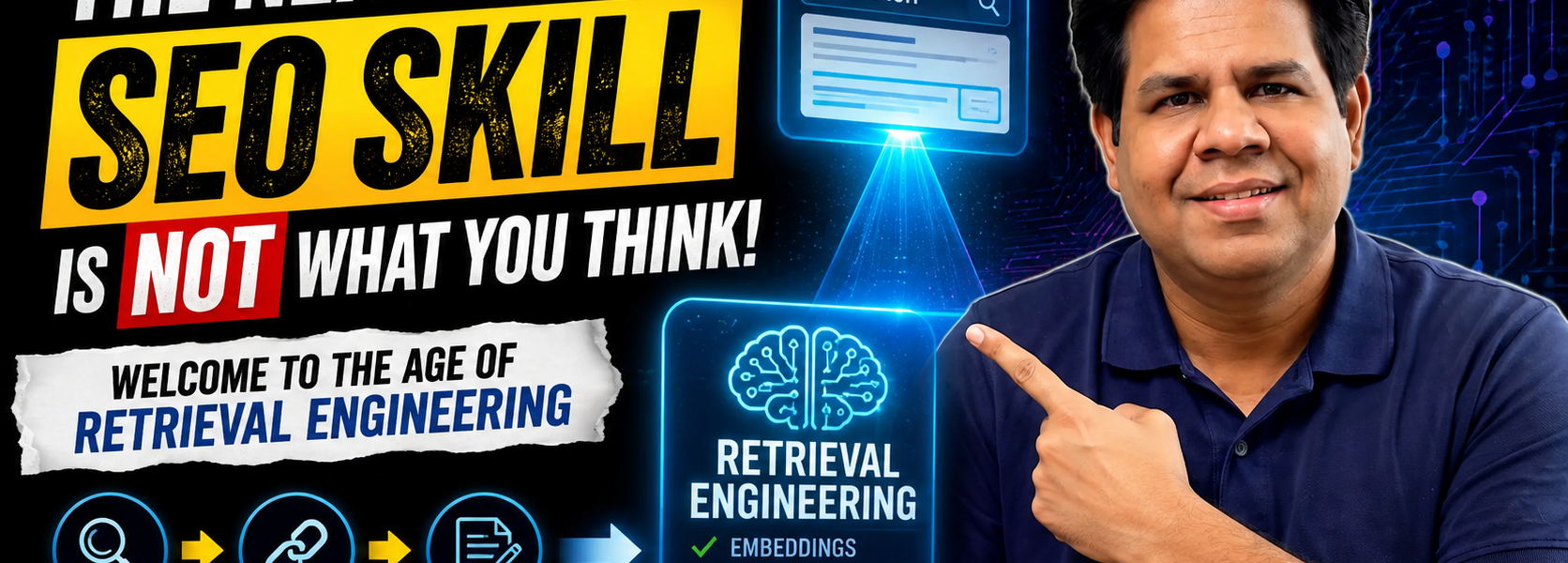
In this episode, we explore how SEO is moving from traditional keyword optimization toward semantic relevance, passage-level retrieval, embeddings, content chunking, entity architecture, structured data, and machine-readable content.
The central idea is straightforward:
The future of SEO isn’t simply about creating pages that rank. It’s about designing information that machines can reliably understand and retrieve.
What Is Retrieval Engineering?
Retrieval engineering is the practice of structuring and optimizing information so that machines can efficiently find, understand, retrieve, and use relevant content.
For SEO, this means thinking beyond the webpage as a single unit.
Modern AI-powered search systems can evaluate smaller passages, concepts, entities, relationships, and semantic representations when determining which information is relevant to a query.
That creates a new SEO challenge.
Your content needs to be:
- Semantically relevant
- Clearly structured
- Contextually complete
- Easy to parse
- Entity-rich
- Machine-readable
- Accessible to crawlers
- Supported by credible sources
- Organized into meaningful retrievable sections
Why SEO Is Becoming More Technical
Traditional SEO largely focused on page-level signals such as keywords, titles, headers, links, crawlability, and metadata.
AI search adds another layer.
Content can be broken into chunks, transformed into semantic representations such as embeddings, compared against queries, and retrieved based on contextual relevance.
This changes the role of the SEO professional.
Instead of asking only:
“How do I rank this page?”
Modern SEO increasingly needs to ask:
“How do I make this information retrievable for the right intent?”
That requires an understanding of information architecture, semantic relationships, entities, structured content, embeddings, and retrieval systems.
Why Embeddings Matter for SEO
Embeddings allow machines to represent the meaning of content mathematically.
This enables systems to identify semantic relationships even when exact keywords don’t match.
For example, a query about the best shoes for running may be semantically related to content discussing top sneakers for jogging, even though the wording is different.
This is one reason keyword matching alone is becoming insufficient.
For content to perform well in semantic retrieval environments, it needs sufficient context and topical depth.
Thin content may struggle to establish the necessary meaning.
Comprehensive, well-structured content gives retrieval systems more context to understand where and when the information is relevant.
Why Content Chunking Matters
AI retrieval systems don’t necessarily treat an entire webpage as one indivisible document.
Specific passages or sections may be retrieved based on their relevance to a query.
That makes content chunking increasingly important.
Each major section should communicate a clear idea.
Strong retrieval-oriented content typically uses:
- Descriptive headings
- Focused paragraphs
- Clear topical sections
- Direct answers
- Strong semantic relationships
- Relevant entities
- Logical internal links
Instead of thinking of an article as one large document, SEOs increasingly need to think about it as a collection of retrievable knowledge units.
From Keyword Targeting to Meaning Ownership
Keyword research remains valuable, but it is no longer enough to build a comprehensive AI search strategy.
Modern content strategy needs to consider:
- Search intent
- Topic clusters
- Semantic relationships
- Entity coverage
- Content gaps
- Passage-level answers
- Internal linking
- Structured data
- Retrieval opportunities
The more useful question may no longer be:
“Which keyword should we target?”
Instead:
“What meaning space do we want our brand to own?”
This shift has major implications for enterprise SEO and content strategy.
What Retrieval Systems Want
At a fundamental level, retrieval systems need information that is:
Clear. Relevant. Contextual. Structured. Accessible. Trustworthy.
This explains why several traditional SEO disciplines remain important while becoming more sophisticated.
Technical SEO now increasingly intersects with:
- Structured data
- Entity modeling
- Rendering
- Crawl accessibility
- Information architecture
- Machine readability
- Performance engineering
- Semantic content architecture
The technical side of SEO isn’t disappearing.
It is becoming more important.
The Future SEO Professional
The future SEO may look more like an engineer.
Not because SEOs need to become full-time developers, but because visibility increasingly depends on understanding how information systems work.
Future-facing SEO professionals will need to understand concepts such as:
Embeddings → Chunking → Retrieval → Entities → Semantic relevance → Structured knowledge → AI visibility
The winning combination will likely be creativity plus technical understanding.
SEO professionals won’t stop creating content.
They will increasingly architect knowledge systems that machines can retrieve and understand.
Conclusion
The next phase of SEO is moving beyond traditional ranking optimization.
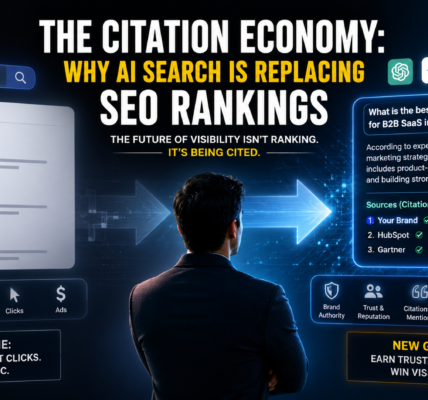
AI search is creating an environment where brands need to compete not only for rankings, but also for retrieval, relevance, answers, summaries, and citations.
Retrieval engineering represents an important way of thinking about this evolution.
If you understand embeddings, chunking, semantic relevance, entity architecture, structured content, and retrieval logic, you can begin designing content for the systems that increasingly influence how people discover information.
The future of SEO may not belong only to the best content creators. It may belong to the people who understand how machines retrieve the best content.