LinkedIn Marketing in 2026: AI Visibility, LLM SEO & Becoming a Citable Source

What if your next LinkedIn post isn’t just competing for likes, impressions and comments?
What if it could become a source of information for AI systems answering questions about your industry?
That’s the strategic shift explored in this episode of Marketing with AI, hosted by Rohit Shetty.
Traditional search marketing was largely about ranking on Google.
AI search is creating another layer of visibility — being understood, surfaced and potentially cited by AI systems.
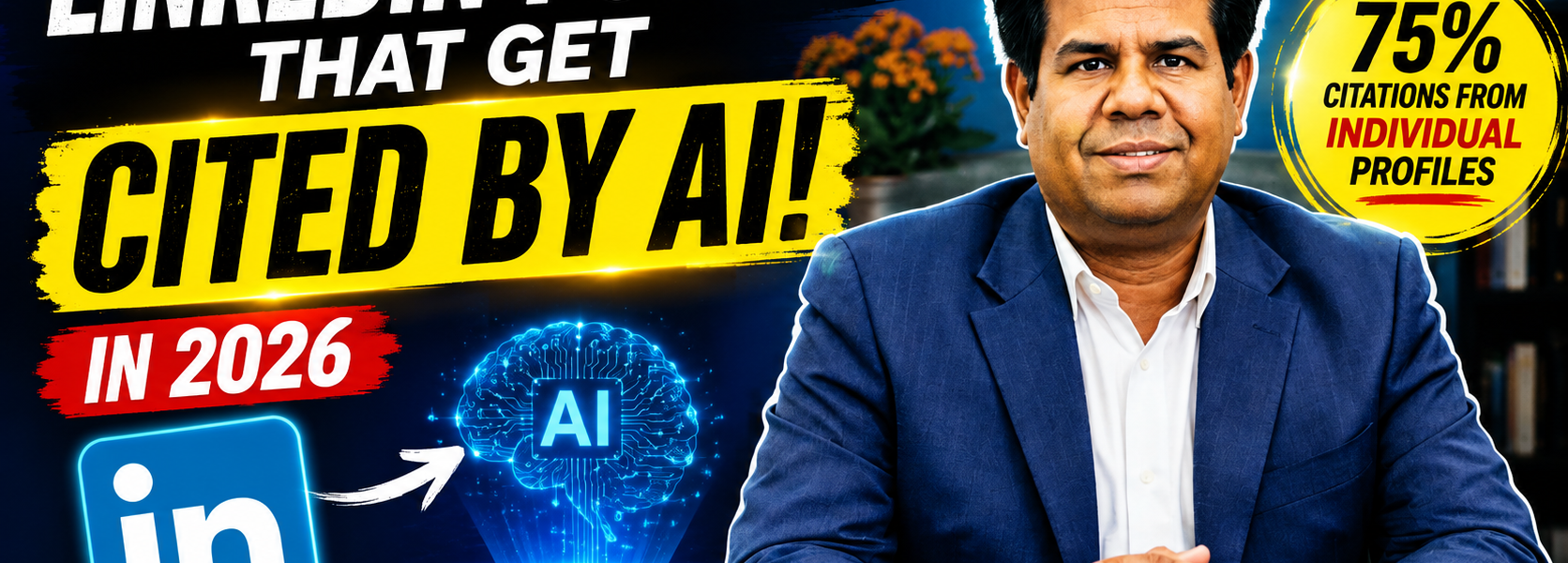
Recent LinkedIn and Meltwater research analyzed 9.5 million AI citations across six major AI platforms and found LinkedIn was the second-most-cited source overall, behind YouTube. Approximately 75% of LinkedIn citations came from individual member content, rather than Company Pages.
For marketers and professionals, this changes the role of LinkedIn.
Your profile can establish who you are and what you know.
Your posts can demonstrate your expertise, experience and point of view.
Together, they can strengthen your digital presence across both human and AI discovery.
What Does AI-Friendly LinkedIn Content Look Like?
The answer isn’t to fill every post with keywords.
AI-friendly content should be clear, specific, structured and genuinely useful.
Instead of simply saying:
“AI is transforming marketing.”
- Explain what that means.
- Define the concept.
- Give examples.
- Add relevant data.
- Use frameworks.
- Answer real customer questions.
- Share firsthand experience.
The LinkedIn/Meltwater research found that highly cited content commonly uses structured elements such as bullets, headings, named entities, quantitative data and comparison frameworks.
This creates content that is useful to people and easier for AI systems to interpret.
The Human + AI Content Principle
There’s an important paradox.
We’re using AI to create content for AI-driven discovery.
But the content still needs to sound human.
Use AI to help with:
- Structure
- Research organization
- Content frameworks
- Question discovery
- Topic clustering
- Content repurposing
But add what AI cannot authentically manufacture from your own experience:
Your observations. Your lessons. Your data. Your mistakes. Your results. Your perspective.
That’s where authority comes from.
5 Things to Test on LinkedIn
- Turn your best ideas into carousel/document posts.
- Create structured knowledge assets rather than disposable social posts.
- Rewrite your profile opening.
- Make it immediately clear who you are, what you know and what problems you solve.
- End posts with specific questions.
- Move beyond generic engagement bait.
- Publish real expertise.
- Share behind-the-scenes experiences, lessons, examples and original insights.
- Run an AI visibility audit.
- Ask ChatGPT, Perplexity and other AI systems the questions your customers actually ask.
Then look at:
- Who gets mentioned?
- Which companies appear?
- Which experts appear?
- What sources are cited?
- Are you included?
- What evidence does the AI use?
The Big Idea
LinkedIn marketing in 2026 isn’t simply about being visible.
It’s about being:
Understandable.
Credible.
Citable.
Because you now have two audiences.
People ask: “Do I trust this person?”
AI asks: “Is this source relevant?”
The opportunity is to become the person who explains the topic.